Ian Simmons (Member no: 2866)
A “Withnail and I” visit to Cornwall
Having given the dog a trial run with the Waldron Nine Maidens, I decided to be more ambitious and visit Mên-an-Tol, at least, in part, because it’s not every day you get to see a circular megalith with a hole in it
CORNWALL In late March, I found myself on a “Withnail and I” visit to Cornwall (“We’ve gone on holiday by mistake”) after cheerfully volunteering to dog sit for a friend while they went on an expedition I was 90 percent certain wouldn’t happen, but did. Needing to exercise the dog and finding myself in stone country, I decided the best thing to do was to combine dog walks with circle visits as I had not previously had the opportunity to see many in Cornwall.
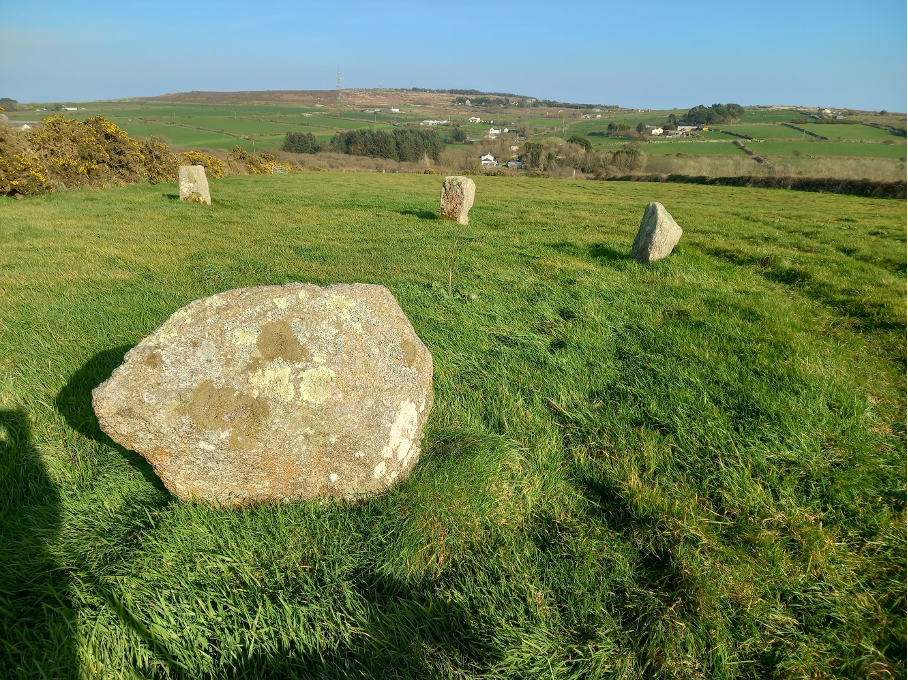
The Nine Maidens, Wendron, TR13 0HZ So, my first discovery was that Cornwall is really confusing; this is not the Nine Maidens near St Columb Major, nor is it Boscawen-Un, also sometimes known as the Nine Maidens, or Tregeseal, also also known as the Nine Maidens (and sometimes The Dancing Stones). It isn’t even the Nine Maidens that sits just over the hill from Mên-an-Tol, which is also known as Boskednan. This is a completely different Nine Maidens, one that doesn’t appear in most of the guide books, and there are four of them (or maybe five), not nine.
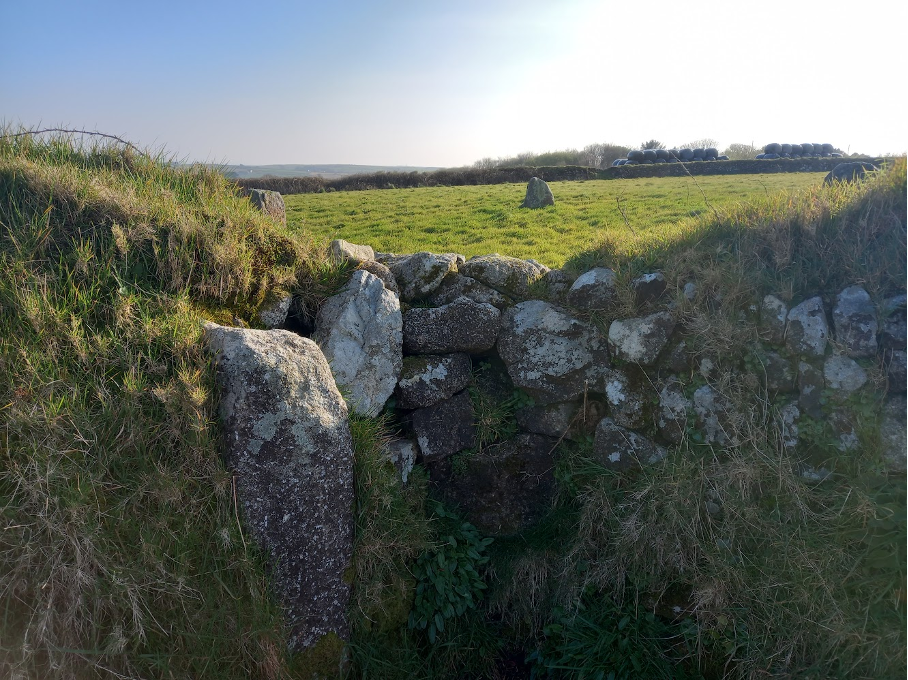
OK, so, having got that straight, where exactly is this? These Nine Maidens are just off the B3297, at Wendron, not far from Camborne. The stones themselves are not visible from the road, they sit in a field just behind a farmhouse, opposite which there is a convenient layby for parking, and while Google Maps suggests you can get to the circle by crossing the road and walking straight through the house, I doubt this is possible. There is, however, a tiny path just to the left of the house, accessed via a stone stile. This is not signposted, and some reports suggest a sign that was once there has been removed, and that the path had been blocked with pallets, which might indicate an attempt to discourage visitors. Anyway, having achieved the interesting task of getting over a stone wall with an energetic dog on a short lead, we found the narrow path clear and rather charmingly scattered with primroses. This took us round the house and along a stone hedge to a point where there appeared to once have been another stile to get you directly into the stones, but which now lacked steps. However, continuing along the path, we found a third stile that took us into a field that had a gate to the stone field a little way down on the right, making it possible to double back to the Nine Maidens. Both fields appear to be intended for grazing, although no animals were visible during my visit, but if you go, do be alert for livestock.
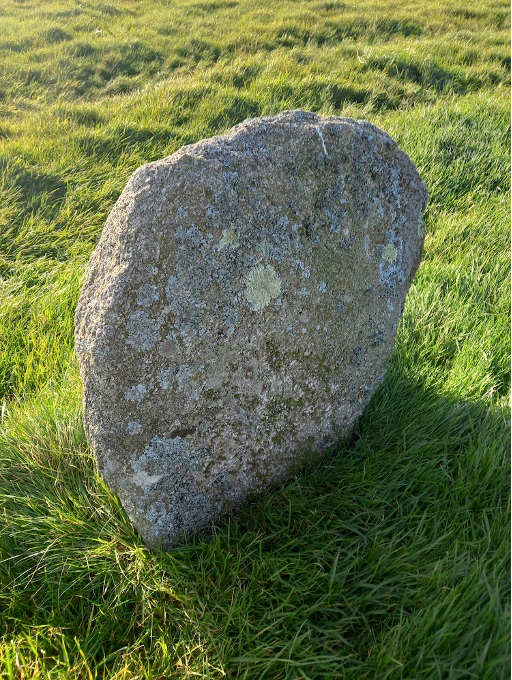
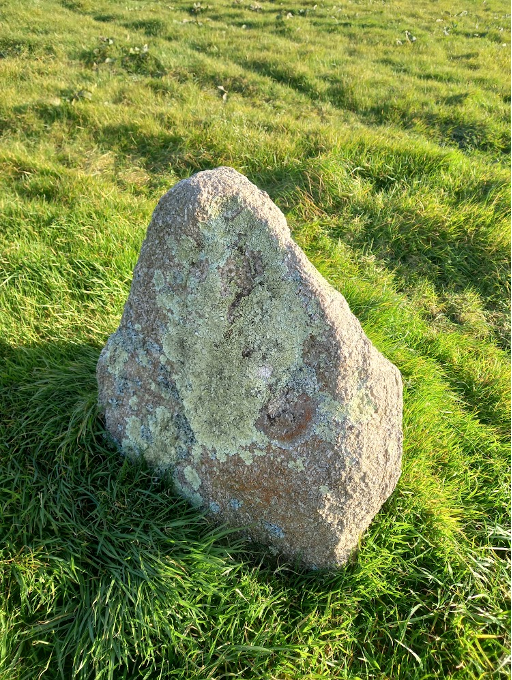
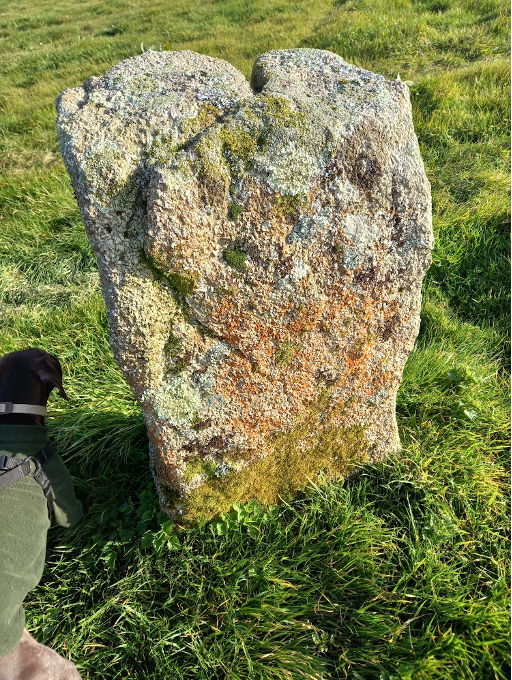
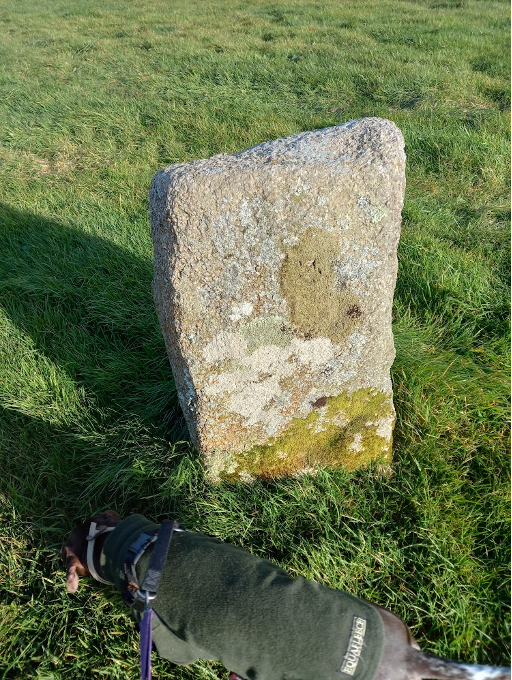
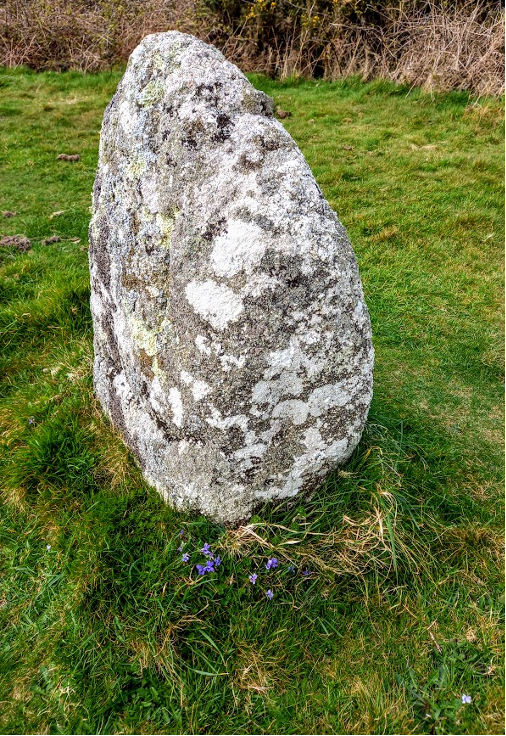
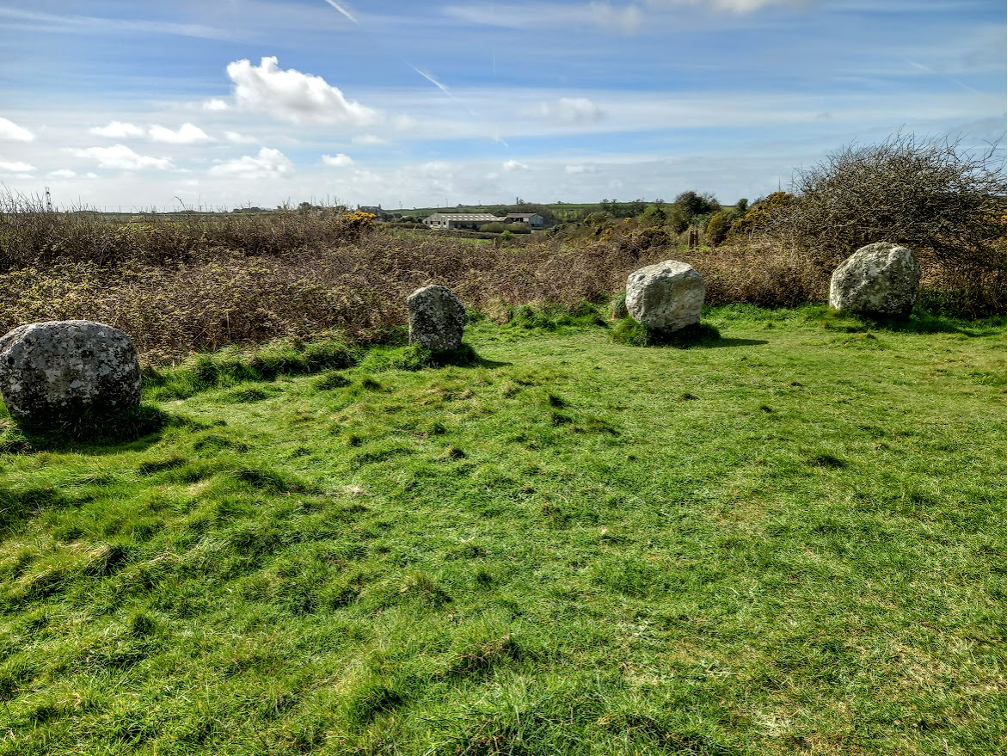
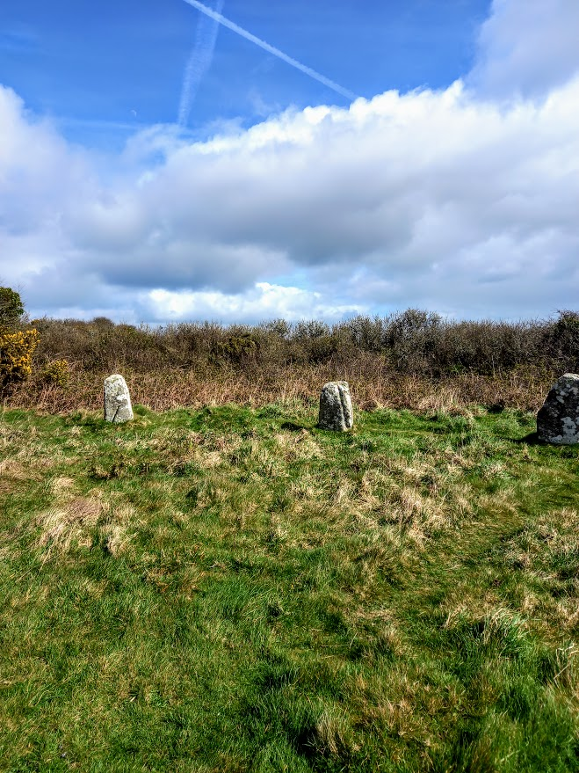
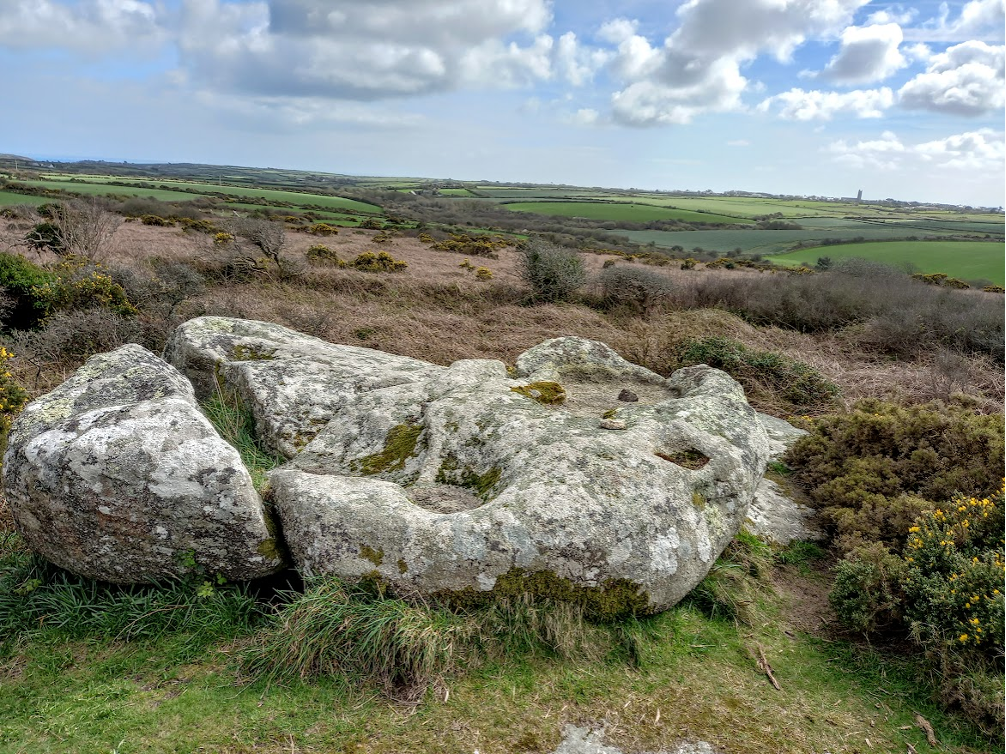
The Nine Maidens sit close to the brow of a shallow hill, small and unassuming, and it is very clear that the four stones are a remanent of what was once a larger circle that has been cut in half by the stone hedge, conceivably constructed using some of the now missing stones. There is one stone protruding from the wall at the former stile which looks very like it was another circle stone that was just built into the wall where it stood. The remaining stones all stand around knee high, and are of different shapes; one is pyramidal, another a squat rectangle, a third flares out towards the top, while the largest is a rough rhombus. The stones also sport a rich coating of lichen, equal to the impressive flora found on some of the Avebury stones, should you have an interest in such things.
Despite their small stature and reduced number, these stones sit there with a quiet and self-contained dignity, looking out over the surrounding landscape and defying all the change that has happened around them. They have a pleasant sunny vibe, although that may be because I was visiting on the warmest day of the year so far, and under an unaccustomedly clear blue sky. Perhaps you would not want to make a special visit to see these Nine Maidens, unless you had a dog to amuse, but should you be passing I would recommend stopping off for half an hour to take them in; stones do not have to be famous, large, or numerous to be impressive.
Mên-an-Tol TR20 8NU
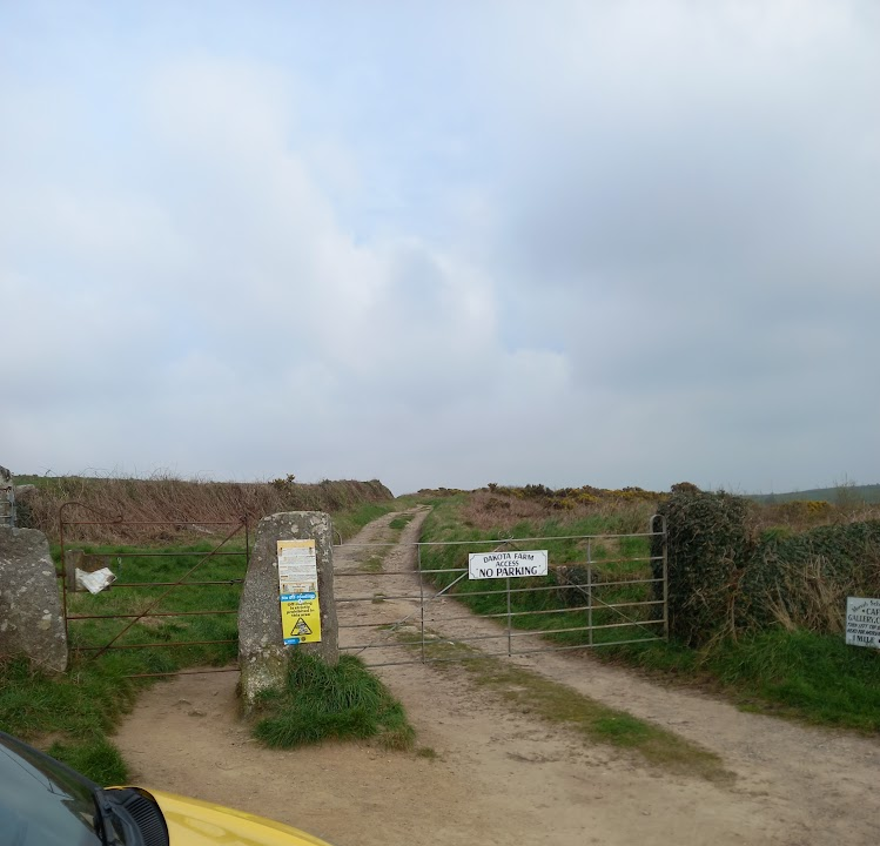
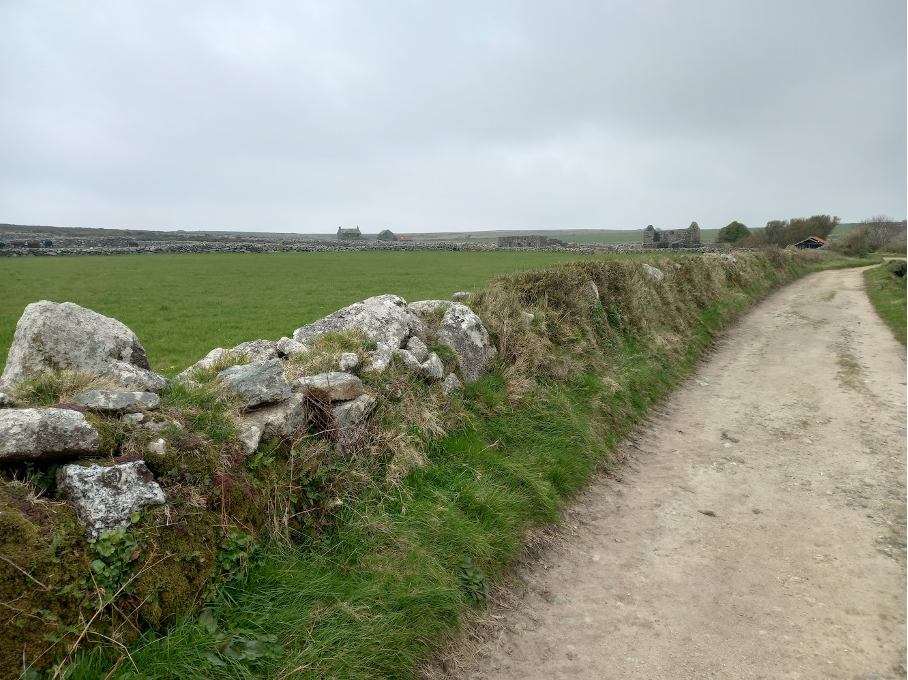
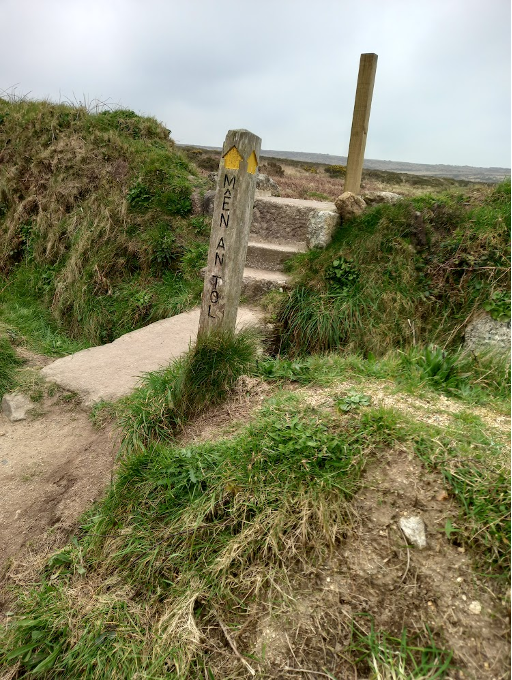
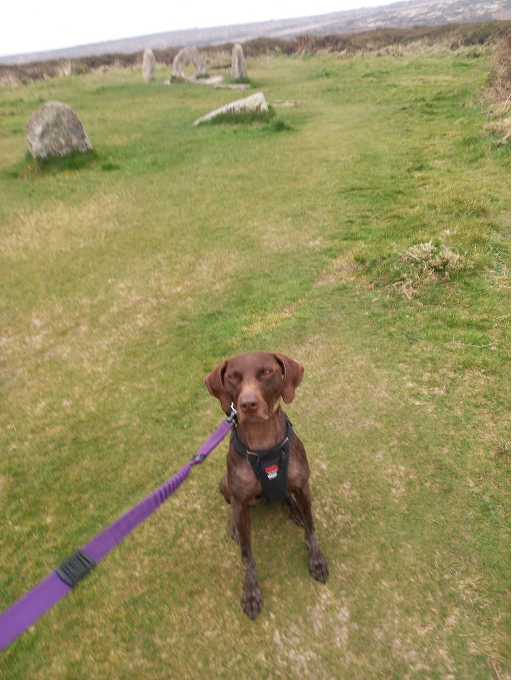
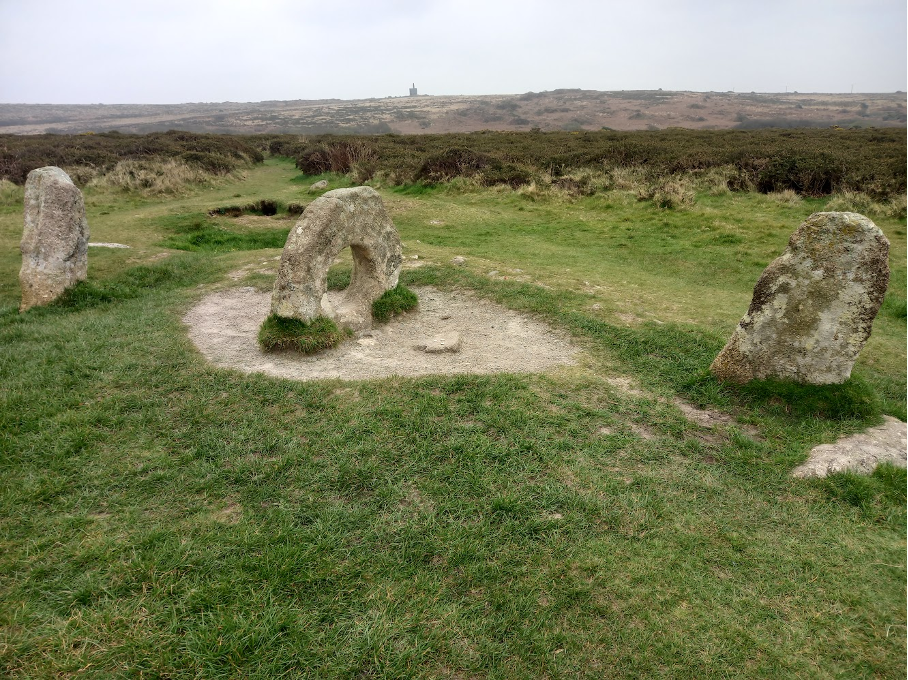
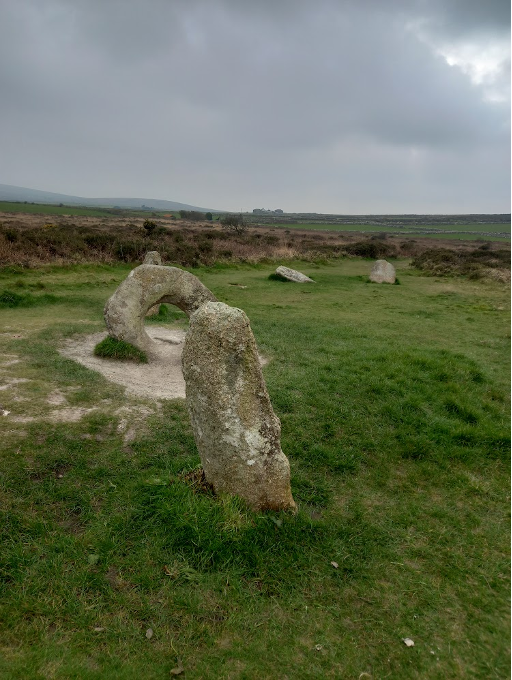
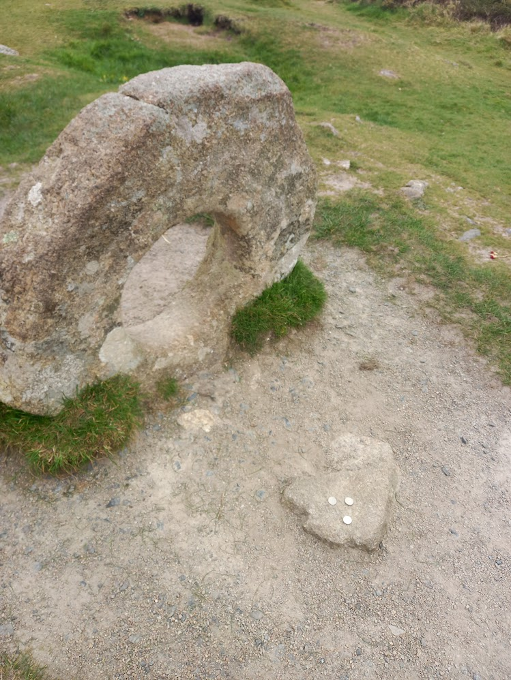
Having given the dog a trial run with the Waldron Nine Maidens, I decided to be more ambitious and visit Mên-an-Tol, at least, in part, because it’s not every day you get to see a circular megalith with a hole in it, and partly because the ever-unreliable Google Maps suggested it was but a short hop over a wall from the road. Spoiler: it isn’t. Yes, it is not far from the Peddler’s Way (not to be confused with Peddar’s Way; that’s in Norfolk and not remotely near any stones), but this is not exactly a road, it’s more of a well-appointed dirt track with a farm gate at the bottom and a sign saying ‘no off-roading’ in case you were in any doubt. However, there is an area where you can park at the bottom, and the going is relatively easy once you are through the gate, taking you up onto Penwith Moors through a traditional Cornish landscape of fields and stone hedges, peppered with derelict cottages whose owners have resisted the urge to convert them into Airbnbs. A longer walk than I expected, under a grey and lowering sky, tailor made for brooding moorland visits (the heights were wuthering for all they were worth during our visit), but still only 15 or 20 minutes, and pleasingly sufficient to wear the dog out a bit. I was expecting to see the stones before I reached them, so I was surprised to encounter a sign at a stile directing me onto the moor, where, a few yards distant, the stones nestled in a clearing among the gorse, much smaller than I’d imagined them. They were still humming with presence, despite having been extensively buggered about with in historical times - there are engravings showing them arranged quite differently, and with more stones than are visible now. I suspect some well-meaning antiquarian found the current alignment - with a small menhir, the pierced circular stone, then another menhir in a row - far more visually satisfying and decided to “return them to how they should have been”. Remarkably, it works; they definitely have an aura, and people had been leaving offerings on the flat stone in front of the polo mint one. No one was passing sickly babies through it while I was there, though (it’s supposed to cure rickets and TB and to restore changelings, among other things) – it’s probably still too cold. The dog did decide to enter - they sense things we don’t. It’s also famed for bringing fertility, but if it reverses her neutering that will be a genuine miracle. I was tempted to continue a bit further and view the nearby single stone, Mêns Scryfa, with its Celtic inscription, but the dog was getting restive and had already horrified a spaniel and attempted to body slam a passing hiker out of excitement, so I thought I should descend and take her home before more mischief was caused.
Boscawen-ûn TR19 6EJ
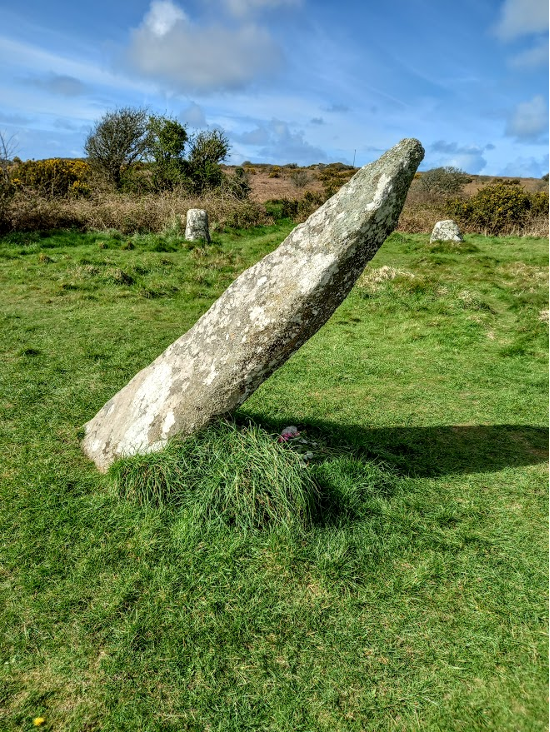
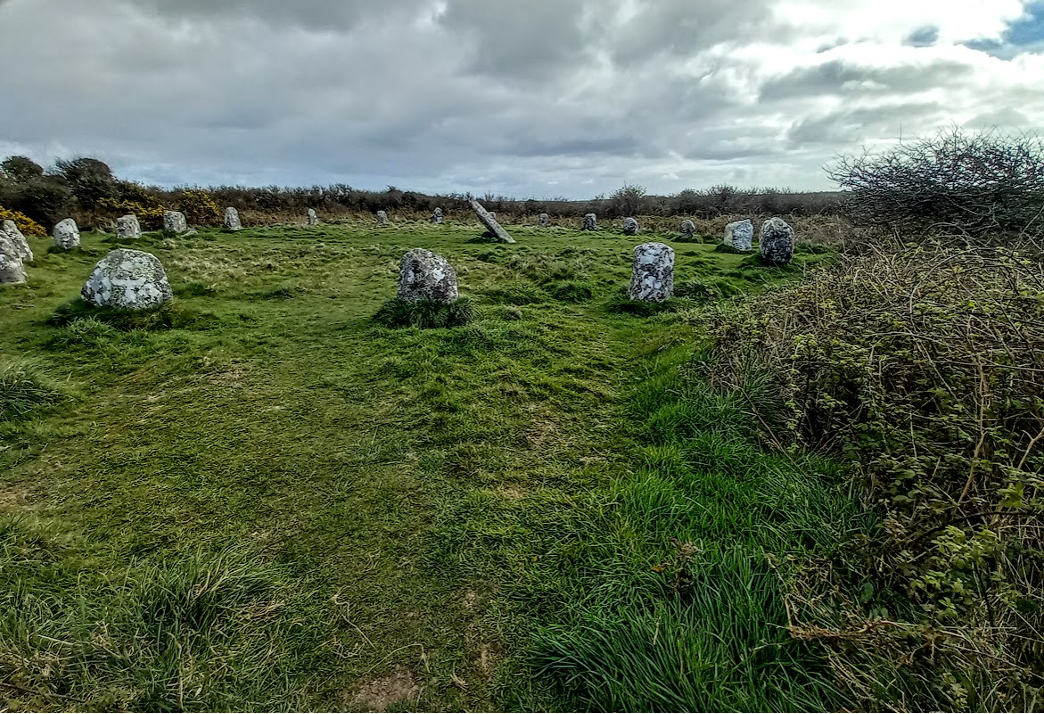
This is definitely one of Cornwall’s rock star circles, on account of its rakishly angled central menhir, which may, or may not, be a sighting stone for astronomical observations, or perhaps has just subsided over time. It is also exceptionally conveniently located, being just off the A30 (although I doubt this was uppermost in the minds of its builders), with its own layby. A kissing gate takes you onto the moorland, where a narrow, winding, path through gorse and brambles meanders comfortably downhill to the circle itself, just under a kilometre away, giving you time to appreciate the views over the surrounding countryside and the wide Cornish skies. During my visit these were still restless from a couple of days of stormy weather, so I was treated to a gloriously tumultuous cloudscape.
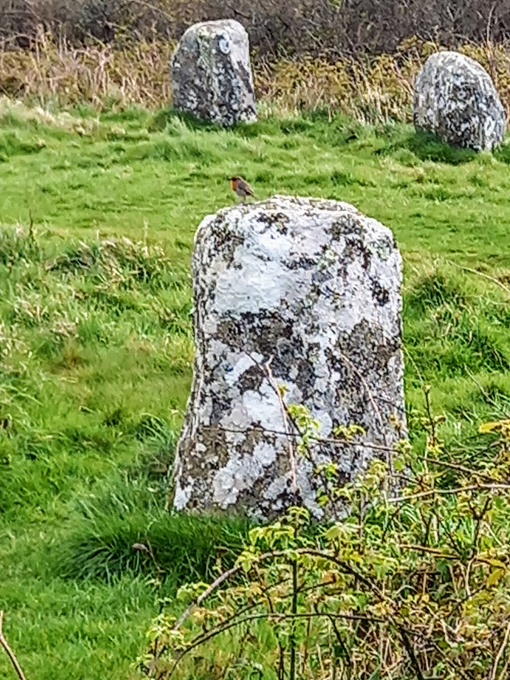
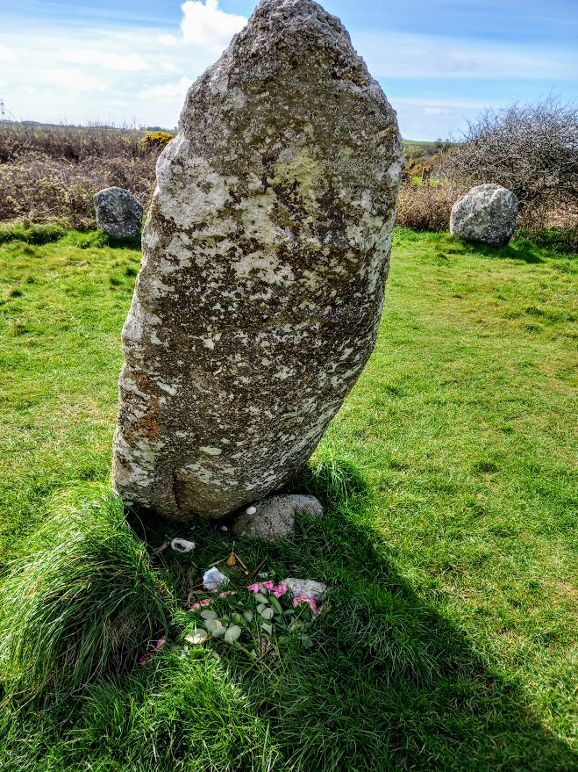
Boscawen-ûn can be seen from a distance, sitting in a clearing surrounded by its own stone hedge, which gives it the feeling of being not entirely part of our world. When I reached it, the only way in seemed to be a high, stepped, stile over the hedge, so I did the dog/jump/clamber thing to get in, and was treated to the sight of a rather territorial robin sitting on the nearest stone, giving us a wary glare as we did so. In fact, if I’d just continued round the hedge for about 20m, there is a perfectly decent gate, for which I was very grateful on departure. Almost certainly complete, and largely unmessed with, Boscawen-ûn is an orderly and civilised circle of knee-to-waist high stones, all but one made of granite (the other is quartz, which may signify its importance for astronomical observations), and all have their smooth side facing inwards. On my visit, most of them were ringed with a lovely scattering of fresh march violets, announcing the proper arrival of spring. At the centre is that larger angled stone, leaning at 45 degrees, in the shelter of which an assortment of offerings had been left, ranging from oyster shells to a miniature broom and a bunch of now-withered roses. My canine companion, though, was much more interested in a different kind of offering, and rolled in something unspeakable while I had my back turned.
Of all the circles I’ve been to so far, this was the busiest; several other people turned up while I was there, and we affably chatted while the dog made friends with an enthusiastic fat labrador accompanying one couple. All were tourists visiting the area, and they were as pleased as I was to be able to get outdoors again after two days of icy Atlantic rain. On the way back, I diverted just before the road to visit the Giant’s Footprint, a natural rock formation that is either supposed to look like a giant foot, or has depressions on it that do when filled with rainwater. I clearly do not have the level of imagination required to perceive that, but it was a pleasant diversion, even if the path went right through the middle of a major gorse bush, and there is a lovely view back to Boscawen-ûn from the top.
Stonehenge
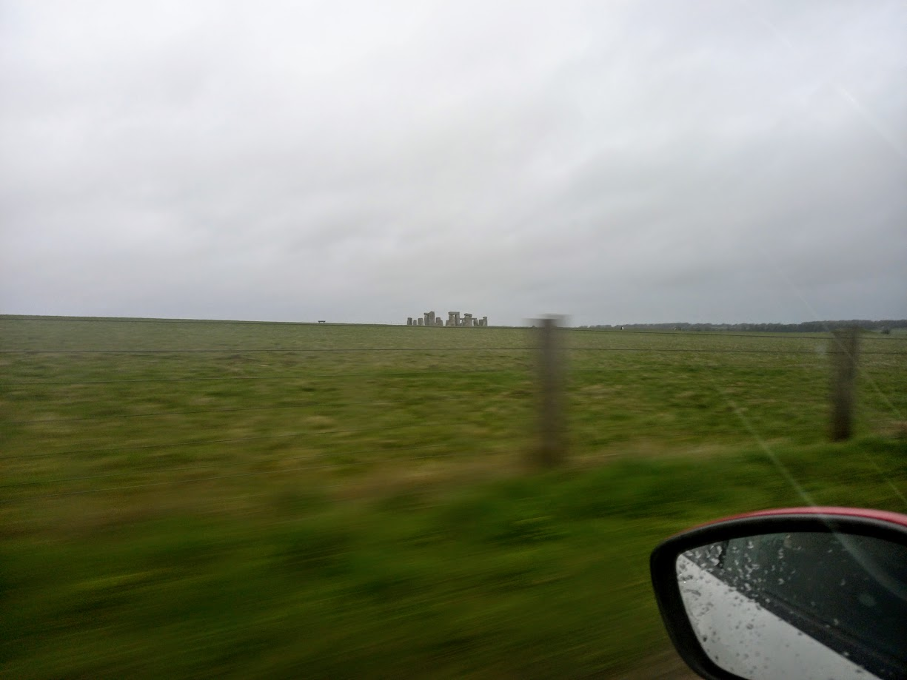
Well, OK – not strictly in Cornwall – but it is right next to the cursed A303 along which I was returning home. This has had its latest traffic easing scheme canned, the latest of many to bite the dust, leaving drivers to barrel along a single carriageway road through the sacred landscape, or more often, crawl in a traffic jam. The gods were smiling on me, though, and the traffic merely slowed down as we passed the actual stones. I was planning to break our journey here and go have a nose, as I haven’t been since facilities were upgraded a few years back, but a combination of sloth, disorganisation and the clocks going forward meant we didn’t actually get there until just before the site closed, so instead you will have to make do with a quick photo shot from a moving car. Sorry.